
I am going to go ahead and say this was the best read of the year. I still think Shoe Dog is a better more engaging book, but to be fair even though I reviewed Shoe Dog this year, I read it many years before.
When a book makes me a better executive, I think you gotta give that book props and I do feel this book has made me better at my job! Ok that is a heck of an admonition, so I better explain. I am always careful not to lose empathy for the people who work around me and I would argue that as of late, I have left things a little looser than I have in the past with the idea that the Executive Team’s that I manage need to run their departments. While this is true, I am responsible for clearly stating what I expect the outcome to be and then hold them accountable to that outcome. I think in my quest to be more empathetic, I let some of that go. This book and Elon’s command and control approach let me know that I had some room to give. I will never be as controlling as Elon was in the past or is now.
Let’s get back to the book! I had some insight that this would be good because Isaacson was the author of Steve Jobs’ biography and of course that was great as well. I am most definitely giving this 4.5 stars and for the life of me, I am not sure why I just won’t give it 5, maybe because I wanted more on what Elon’s plans for X formerly twitter are and perhaps I wanted a bit more around what Elon thinks the future of our world truly is. Also, I found myself wanting more, which I couldn’t distinguish if it was because there was not enough detail (the book is 600 pages, that cannot be it!) or that I was just enjoying it that much.
There are many takeaways from this book.

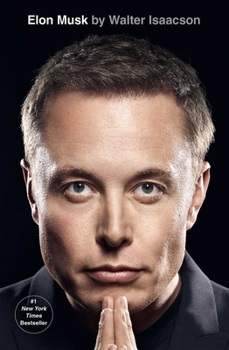
His childhood was far from perfect nor was his father, but they all seem to have created the individual who sort of torments himself into greatness. Much like his parents, friends and even his on conscious seemed to do when h was growing up. Starting from scratch Musk has built America’s leading rocket and space communications company by ignoring what many people would call conventional wisdom! In fact, the rules of the major aerospace companies were sometimes questioned to a level that made him enemy number one at times but it allowed him to deliver rockets at one tenth the cost of his bloated competitors.
Musk’s rules are:
1. Doubt every requirement.
2. Question every cost?
3. Act with a sense of urgency.
4. Learn by failing.
5. Improvise.
He also suggested when they were simplifying and going through value stream mapping the following: If you don’t have to put 10% back on the rocket when we are done then you didn’t take away enough. Which came back to “Question Everything”
Isaacson gets deep into his unhappy childhood, crazy personal life which includes 3 marriages, 11 children and of course the current status of Twitter, Tesla and SpaceX. All in all, this is a great read and I highly suggest it!