
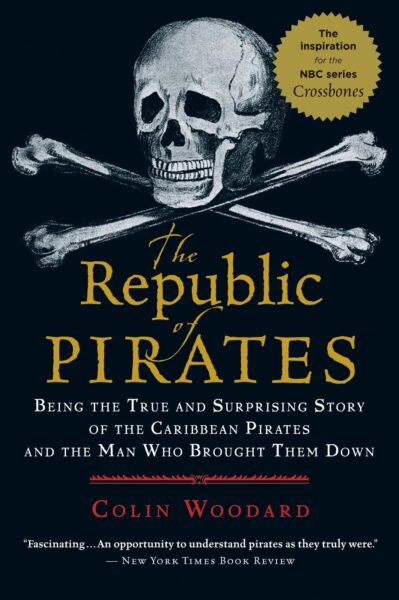
Book Review: The Republic of Pirates by Colin Woodard
There are few books that take you so vividly into the past that you can feel the salt air, hear the creak of ships’ timbers, and sense the danger of an untamed world. Colin Woodard’s The Republic of Pirates is one of those books. This detailed and well-researched account of the Golden Age of Piracy pulls back the curtain on the real lives of famous pirates like Blackbeard, Charles Vane, and Anne Bonny, revealing the surprising democratic ideals they upheld in their rebel republic.
What makes this book particularly special for me is the fact that it came recommended by my son. I wouldn’t call him a history buff or an enthusiast of all things nautical, but his excitement about the book was infectious. After reading it, I understand why he was so eager for me to dive into this world—it’s not just a story of swashbuckling adventure but an exploration of a time and place where people defied empires to create something entirely their own. I love that my son pursues intelligence through the use of reading, but to do so while using history as a guide is pretty cool.
Set in the early 18th century, Woodard centers his narrative on the Bahamas, particularly Nassau, where the Republic of Pirates flourished. What makes this account so captivating is its complexity. Pirates are often caricatured as greedy, lawless rogues, but Woodard portrays them as more than that. Many were disillusioned sailors, enslaved people, and outcasts who rejected the brutal hierarchies of the British Navy and merchant fleets.
In Nassau, they established a society where leaders were elected, spoils were divided equally, and captains served at the pleasure of their crews.
The author doesn’t shy away from the darker realities of piracy—violence, plundering, and the constant threat of betrayal—but he balances these with insights into their motivations and the historical forces that shaped them. The result is a nuanced portrait of a movement that, for all its flaws, represented an early experiment in democracy.

Woodard’s ability to breathe life into historical figures is a standout feature of the book. Blackbeard, for example, emerges not just as a terrifying figure with a smoking beard and a penchant for theatrics, but as a shrewd leader who understood the power of reputation. Similarly, figures like Sam Bellamy, the “Robin Hood of the Seas,” and Anne Bonny, one of the few female pirates of the era, are portrayed with depth and humanity.
The storytelling is cinematic in scope, with thrilling accounts of battles, political intrigue, and the eventual downfall of the pirate republic. I found myself turning the pages late into the night, eager to see how each chapter of this real-life drama unfolded.
The book’s strengths lie in its rich detail and balanced narrative. Woodard brings the world of piracy to life without romanticizing it, and his research is impeccable. However, some readers may find the level of detail overwhelming at times, especially when it comes to the political and economic context. While I appreciated the depth, I can see how others might feel bogged down in the minutiae and you might imagine, I was impressed that my son took the time to dig in.
The Republic of Pirates is more than just a history book—it’s an adventure, a political commentary, and a meditation on freedom and rebellion. For anyone who loves stories of the sea, tales of daring, or the complexities of human nature, this book is a must-read. And for me, it will always hold a special place on my shelf, not just for its content but for the fact that it came from my son’s recommendation. Sometimes, the books that truly resonate are the ones shared with the people you care about.
Rating: ★★★★★ (5/5)
Whether you’re a history lover or simply someone who enjoys a good story, The Republic of Pirates is a treasure waiting to be discovered. My son was right—I’m grateful he convinced me to read it.
.