
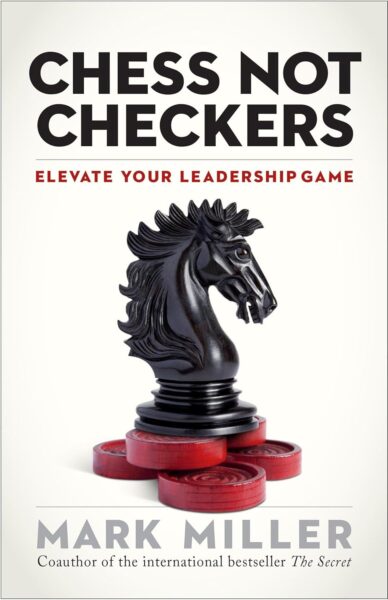
Ok first I have to admit that I happen to believe that no one does the business fable books better than Patrick Lencioni, but I decided to give this one a shot – Mark Miller’s Chess Not Checkers: Elevate Your Leadership Game enters the crowded field of business leadership fables with a simple metaphor and a familiar structure. The book positions itself as a modern parable aimed at leaders transitioning from managing a small team to leading a more complex organization. Through the journey of Blake, a newly appointed CEO, Miller delivers leadership lessons that are easily digestible—but at times, pretty remedial.
Strengths:
The central metaphor—leaders must stop playing “checkers” (where all pieces are the same) and start playing “chess” (where every piece has unique capabilities)—is compelling and memorable. It effectively communicates the idea that as organizations grow, leaders must recognize and leverage the diverse talents of their teams, rather than manage everyone uniformly. The book is structured around four primary moves of leadership: Bet on Leadership, Act as One, Win the Heart, and Excel at Execution. Each is clearly defined and reinforced with narrative.
I will admit that Miller’s writing is clean, concise, and accessible. The fable format allows busy professionals to engage with the material in a couple of hours, making it a good airplane read or kickoff book for a new leadership team. I listened to it on one of my many trips between Baton Rouge and Birmingham. It’s particularly helpful for first-time leaders or those moving from tactical roles into strategic ones.
Limitations:
While the fable format is approachable, it may frustrate readers looking for depth, data, or more nuanced perspectives. Chess Not Checkers leans heavily on the story at the expense of analysis or fact. The leadership principles, while sound, are not new. Readers familiar with books like Patrick Lencioni’s The Five Dysfunctions of a Team, Jim Collins’ Good to Great, or even Miller’s own The Secret will find the content familiar and, in some cases, redundant. I still think Patrick is the master at this and maybe why I was highly critical of this one.

Additionally, the characters in the fable are thinly developed, existing primarily to deliver or receive leadership lessons. This can make the story feel didactic and predictable, especially for seasoned executives or readers with a background in organizational development. The simplicity that makes the book accessible to emerging leaders might leave experienced readers wanting more substance or challenge.
Bottom Line:
Chess Not Checkers is a solid entry-level leadership book best suited for new managers or small business owners navigating organizational growth. It distills important leadership concepts into a memorable metaphor and an easy-to-read format. However, for those looking for groundbreaking insights or deep strategic frameworks, this book plays it safe—more checkers than chess in its intellectual ambition.
I give this one 4 stars and if depth you want that is generous, if you want a high level reminder that not every person or situation is the same Ithink that rating is perfect